
From Wound Data to Better Decisions: The Power of eKare’s Connected Approach
Every wound assessment adds to a growing picture of a patient’s healing journey. But when information is spread across notes, images and reports, it can be difficult for care teams to see which wounds need attention now, where progress has slowed and when specialist input could make a difference.
eKare is helping healthcare organisations turn that picture into action. Its inSight® Wound Management Digital System brings wound imaging, measurement, clinical documentation and analytics together in a consistent digital workflow. healBot Analytics builds on that foundation, helping teams ask questions of their wound data and uncover insights to guide care.
At the World Union of Wound Healing Societies (WUWHS) Congress 2026 in Kuala Lumpur, eKare CEO Patrick Cheng presented a vision for using connected wound data and AI to bring the right patient to the right clinician’s attention at the right time. The aim is straightforward: make it easier to spot a need for intervention and support an informed care decision.
“The value of wound data is what it helps the care team do next: identify who needs attention and make a better-informed decision.”
Patrick Cheng, CEO, eKare
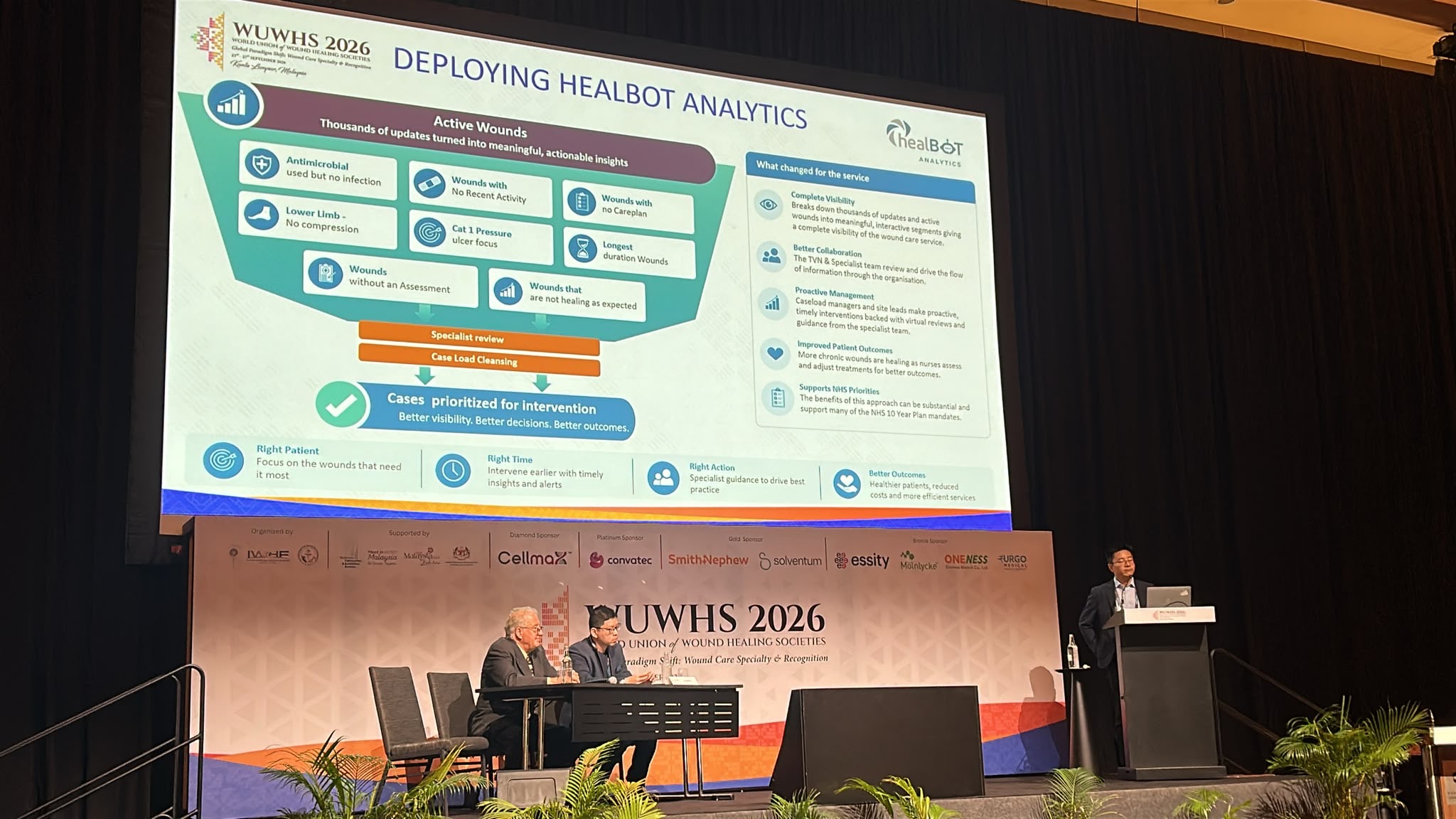
Better care starts with a clearer view
A single wound measurement is useful. A consistent record of images, measurements, assessments and treatments over time is far more powerful. It helps clinicians see how a wound is changing and gives the wider team a shared basis for review.
inSight® captures valuable wound information at the point of care, building a comprehensive picture of the wound population across an organisation. As caseloads grow, understanding the volume, complexity and changing needs of that population becomes increasingly important.
healBot Analytics transforms this wealth of data into actionable intelligence, enabling clinical and operational teams to understand their entire wound caseload, identify where attention is needed and prioritise resources effectively.
By bringing together thousands of wound records, healBot Analytics moves teams beyond reviewing individual wounds to understanding and managing the wider wound population. This supports more informed clinical decisions, targeted interventions, better resource allocation and continuous service improvement.
Within the wider healBot suite, Analytics provides population-level intelligence, trends and reporting, while healBot Monitor supports protocol-driven monitoring and alerts, helping teams translate insight into more proactive wound management.
The right patient. The right time. The right action.
The value of wound intelligence lies in what a team can do with it:
- The right patient: Bring attention to wounds that may need closer review, rather than relying on someone to manually search through a large caseload. Trends and meaningful segments help teams prioritise where to look first.
- The right time: Give clinicians and service leads timely visibility into healing progress, outstanding assessments and changing caseload patterns. Earlier awareness creates an opportunity to review care before a concern is missed or delayed.
- The right action: Put a clear wound history in front of the people making decisions. Clinicians, caseload managers and specialist teams can review the same information, offer guidance through virtual review workflows and adjust treatment when clinically appropriate.
When teams can identify concerns, collaborate and respond sooner, they are better equipped to support healing and use resources wisely. Clinical judgment remains central to every decision.
Learnings from the UK adoption
Patrick Cheng’s presentation at WUWHS 2026 highlighted how eKare’s inSight® and healBot Analytics can help NHS organisations move from large volumes of wound data to actionable caseload intelligence. Drawing on real-world experience from UK NHS services, including South Warwickshire University NHS Foundation Trust (SWFT), the presentation demonstrated how connected digital records can support more proactive, structured and clinically led caseload management.
Rather than expecting clinical teams to manually review thousands of wound records, the approach helps organise the wound population into manageable groups. These can include wounds with no recent activity, missing assessments or care plans, and wounds where healing progress is not meeting expectations.
The key is moving from understanding the entire wound population to identifying the smaller groups of patients who may need attention, review or intervention. This enables tissue viability nurses, specialist teams and service leaders to focus their expertise where it can deliver the greatest value.
“Across the UK, NHS wound care services are managing significant and increasingly complex caseloads. The opportunity is to move beyond simply collecting wound data and start using it to understand the entire wound population — identifying where patients are progressing, where gaps in care may exist and, most importantly, where clinical teams should focus their attention. By turning thousands of records into clear, actionable intelligence, we can help NHS organisations make better use of specialist resources, support more proactive caseload management and ultimately improve patient outcomes.”
Stephen Doades, VP eKare UK
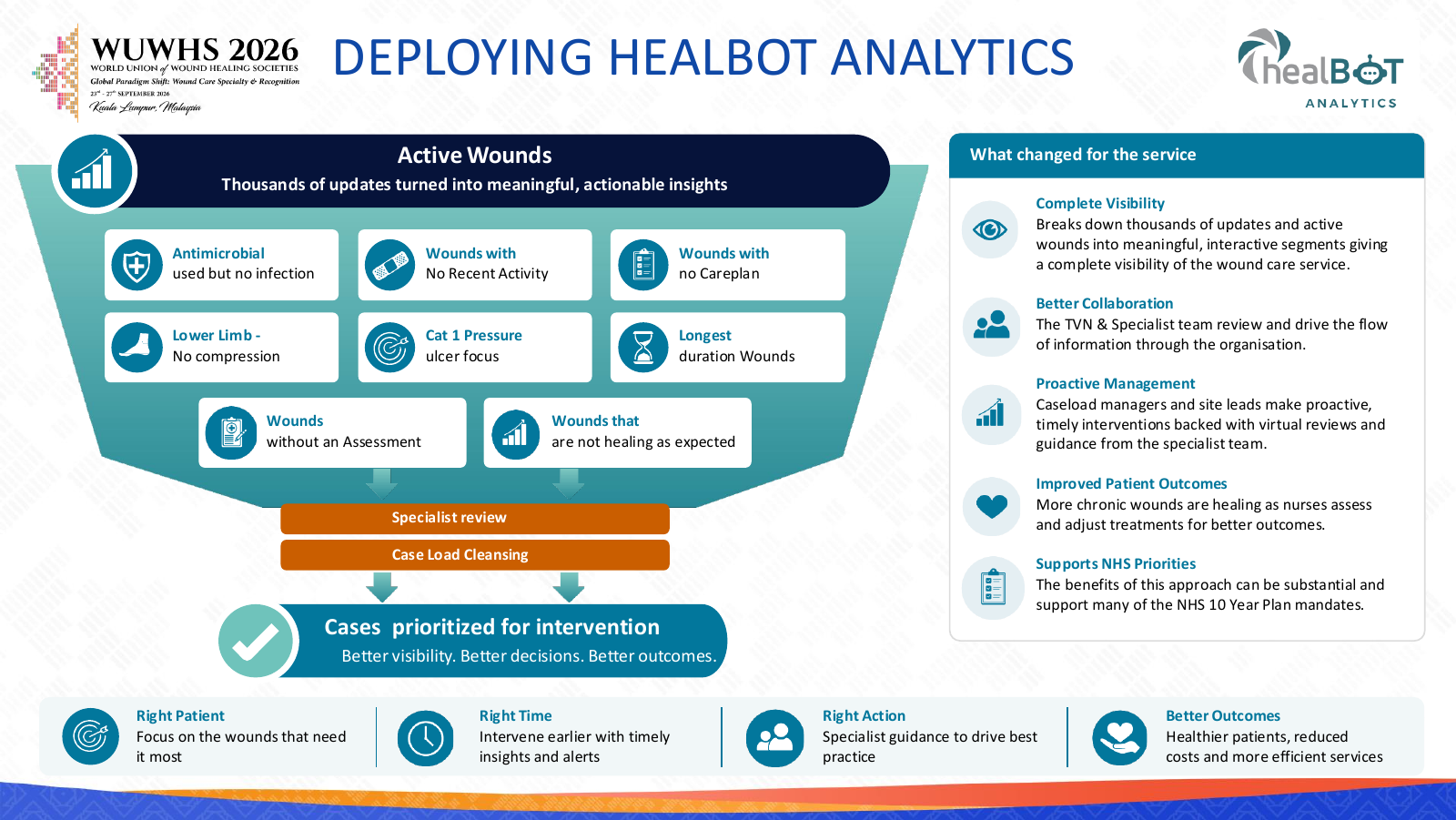
The diagram illustrates a clinician-led workflow. The review groups are prompts to investigate the record and clinical context, not diagnoses or automatic treatment decisions. Any protocol-driven alerts belong to the wider monitoring workflow; Analytics provides the questions, views and reports that help teams see where to look.
For example, a caseload manager can identify a group of wounds with no recent activity and ask the team to check the record. Has the wound healed but not yet been updated? Is a reassessment due? Does the patient need specialist input? The data helps direct attention; the clinical team checks the context and decides what happens next.
Tissue viability nurses and specialist teams can review the relevant wound history, support caseload cleansing and prioritise cases for intervention. Site leads and nurses can act on that guidance, including through virtual review where appropriate. The same approach can support review of treatment patterns, such as antimicrobial use without a recorded sign of infection, while leaving treatment decisions with the responsible clinician.
This is where the connection becomes useful: a service-level question leads to a focused review, a clearer record and an informed next step for an individual patient.
“eKare’s inSight app has revolutionised wound care for our team here at SWFT. It has enabled rapid exploration of thousands of wound data points, breaking them into clinician-friendly interactive views that give full visibility of the wound care service.”
Hollie Robinson, Tissue Viability Service Lead, South Warwickshire University NHS Foundation Trust
Adoption starts with the people delivering care
Connected wound intelligence depends on how it fits into everyday clinical work. The lessons shared at WUWHS emphasised nurse-led adoption: tissue viability nurse champions working with IT, protected training time and regular refreshers as teams change.
Agreeing a minimum dataset and outcome definitions before scaling helps reduce inconsistent recording. Fitting documentation into existing workflows, and involving information governance and clinical safety teams from the beginning, helps keep the system useful and accountable.
What connected wound intelligence means for an organisation
- Clearer service visibility and understanding of outcomes. Gain a comprehensive view of wound populations, active caseloads, healing trajectories and variation across sites and patient groups, helping organisations understand performance and identify areas requiring attention.
- Proactive caseload management and smarter use of resources. Use data-driven intelligence to identify patients and wounds requiring closer review, prioritise clinical time and direct specialist expertise where it can have the greatest impact.
- Stronger clinical collaboration and focus on healing. Consistent digital records provide a shared view of wound history and progress, enabling nurses, wound specialists and service leaders to collaborate, evaluate treatment effectiveness and make timely, informed decisions.
- Turning data into measurable service improvement. Transform wound care data into actionable insights that support performance reporting, pathway optimisation, resource planning and measurable service transformation, with a continued focus on improving healing outcomes.
- The potential to achieve significant real-world benefits to the patients, clinicians and healthcare system
From data collection to meaningful action
When reliable information is captured consistently and made easy to explore, it can help teams manage the whole wound care service with greater clarity.
That is the promise of eKare’s connected approach: inSight® captures the clinical story, while healBot Analytics helps reveal the patterns within it. Together, they help care teams see who needs attention, collaborate on the next step and make more informed decisions for patients.
Ready to see what your wound data can do? Request a demo to explore inSight® and healBot Analytics.